The Beginner's Guide to High-ROI Influencer Campaigns
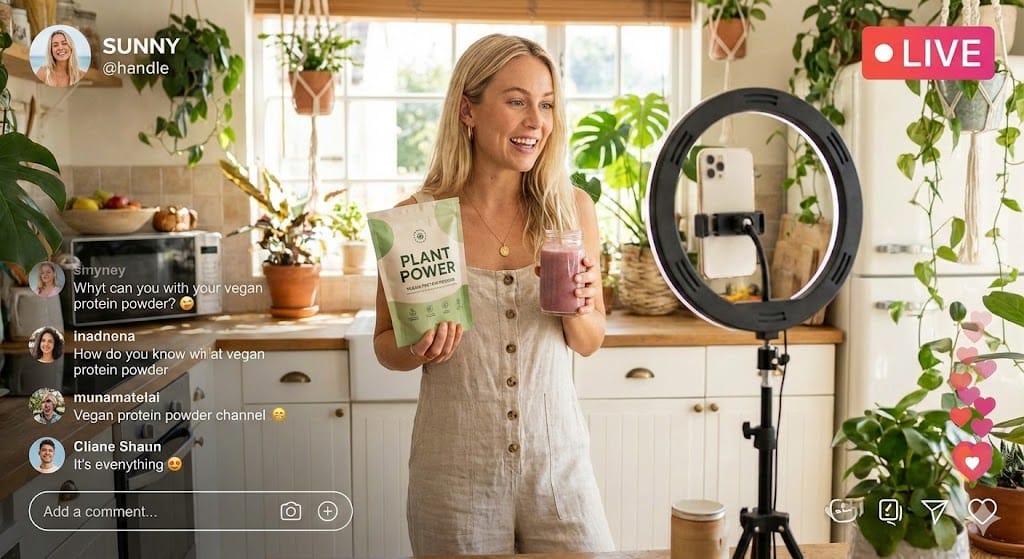
This post is for entrepreneurs and small marketing teams trying to grow an ecommerce product, a SaaS, or a mobile app.
You tested Meta ads, spent hundreds of dollars for meager results. Now it's 2026 and everyone's talking about UGC and influencer marketing. Can you get some of that pie?
So you start looking for influencers in your niche. It's a mess. You get lost browsing accounts that have nothing to do with your brand, wasting hours with no clear system. How do you do this predictably, in a structured way?
That's what this guide is for. In 2026, influencer campaigns are the single highest-leverage way to get the best ROI for your time and money as a small marketing team.
Landmines to Avoid
Going too big. Instagram and TikTok push good content to wider audiences than just the influencer's followers. But if you go after accounts with millions of followers, they won't reply to you. Or if they do, it'll be $5k for a 15-second story. Go ahead if you can afford that concentration of risk. Better to focus on micro-influencers (sub-20k) and diversify your bets.
Using an influencer marketplace. Sure, they look good on paper. But if you're targeting micro-influencers (see above), their data will be stale: a micro-influencer today might have had fewer than 100 followers two months ago when the platform last pulled data. Plus, marketplaces attract creators optimizing for deal flow who may inflate follower counts while having little real engagement. Avoid.
Not on brand. You can find "Nutrition" influencers in one click on many platforms. But are they really relevant if your product is a vegan foodstuff and they keep talking about how red meat is best for muscle growth?
With these landmines in mind, here's the step-by-step guide I used to source dozens of micro-influencers yielding high-ROI campaigns for my products.
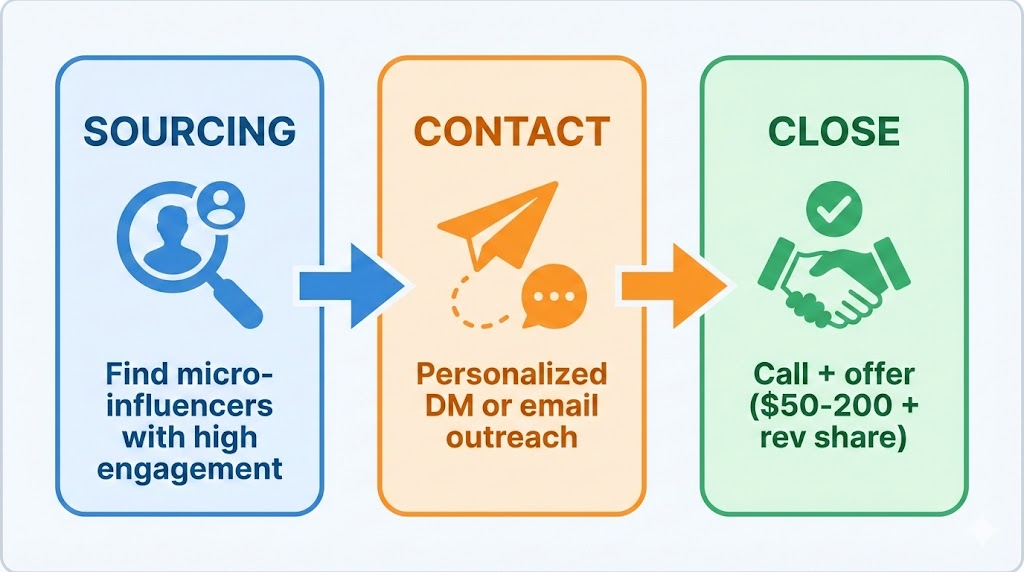
Think of it like a sales campaign: Sourcing → Contact → Close
Step 1: Sourcing
The goal is twofold: find people likely to close a deal, and ensure that if they do post about your product, it will actually have a material impact. The sweet spot is low follower count + high engagement.
Here's how to find them:
- Start with Google. Search your niche with a site filter, e.g.,
"vegan food" site:instagram.com. Browse the results. - Find similar profiles. Instagram usually shows related accounts at the bottom of each profile. Follow those threads.
- Calculate engagement rate. For each profile: (likes + comments) / followers. Do this over their last 5 reels to get an average. You're looking for 5%+ engagement.
- Check recency. Have they posted in the last 14 days? If not, move on.
- Check reach beyond their audience. Look at views / followers ratio. If their reels consistently get 2-3x their follower count in views, the algorithm is pushing their content.
- Review content and bio. Make sure it's actually on brand. Skim their last 10-20 posts.
As you can see, this is time-consuming. Influencer Discovery Tool simplifies this by giving you engagement rates, recency, and reach metrics in seconds across many accounts.
Step 2: Contact
Once you have a list of 50-100 highly qualified creators, it's time to reach out.
Where to message: If there's an email in their bio or links, use that. Otherwise, cold DM them.
What to say: Keep it short, to the point, and hyper-personalized. Respect their time.
Hey, I saw your post where you cook tempeh—very original, I use it too.
We're working on this lychee meat product and would love to partner up. Interested?
Follow up after 3 days if no response.
If your sourcing was good and your message is relevant, expect up to 25% reply rate.
Step 3: Close
If they reply, they'll likely ask what you have in mind. Give some info, but try to push for a short call. Business is about emotions, relatability, and vision—not just cash. You want them to understand your vision and see this as a long-term partnership.
On the call, make a good offer. These days that means:
- $50-200 per initial post (depending on their size and your budget)
- Plus a share of sales (affiliate commission)
Just revenue share alone usually won't cut it. Creators invest real time, and they take a risk by recommending something to their audience. If no one buys, they've lost credibility for nothing.
Set up tracking with discount codes. Whether you use Stripe, an app store, or Shopify, unique codes are the only provable way to track attribution.
Rinse and Repeat
If you do this across the niches you serve, you should land 5-10 partnerships per month. Things might take time, but you'll feel confident that when you do close, it will be impactful—because of the targeted sourcing.
Influencer Discovery Tool facilitates all three steps, reducing the time from weeks to hours to build and execute your campaign.